Tampilkan postingan dengan label Making Coffee. Tampilkan semua postingan

Minggu, 03 Mei 2015

Coffee Drippers- Get a Coffee Maker for Under $10

Coffee Makers for Under $10!?

Did you know you can get a coffee maker for under $10 that makes really great coffee?

These are not typical coffee makers.  I am talking about a "coffee dripper".  This is a cone-shaped device that holds a cone filter and coffee grounds.  You put the coffee dripper over a mug and pour hot water over the top to make pour-over coffee.

All you need to make great coffee is a cone filter, coffee grounds and hot water.

For best results, grind fresh whole beans just before brewing.

RSVP Manual Coffee Dripper


RSVP Manual Drip Coffee Filter Cone for Carafes or Thermos

#4 Cone Filter Dripper


  Plastic Filter Cone #4 Large coffee maker (colors may vary)

HAROLD Coffee Dripper, From Holland


  HAROLD Plastic Filter Cone Medium Coffee Maker, Medium, Red

Melitta Coffee Dripper


  Melitta 64008 Red Ready Joe Filter Cone


Collapsible Coffee Dripper- Easy to Take With You


Kuissential SlickDrip - Collapsible Silicone Coffee Dripper, Filter Cone


Copyright © 2015 Dr. Penny Pincher. All Rights Reserved. Coffee Maker Journal

Minggu, 15 Februari 2015

Biodegradable K-cups: Paper instead of Plastic...

Biodegradable K-cups

I got a tip from a reader about an interesting product- it is a K-cup for Keurig machines, but it is made of a paper coffee filter material instead of a plastic cup like a typical K-cup.  This product is made by the Rogers Family Coffee Company and the brand is San Francisco Bay Gourmet Coffee.  They are currently selling for about 36 cents per cup, which is a pretty good deal for a quality K-cup.
This packaging concept for K-cups is a neat idea for two reasons.  First, it seems like this design would have better potential for flavor extraction since hot water can flow more easily through the coffee grounds.  Reviews of the strong and good flavor of this coffee seem to support this.

Biodegradable K-cups
Biodegradable K-cups- Good Coffee, Less Chemicals

San Francisco Bay OneCup, Fog Chaser, 80 Single Serve Coffees

Second, the paper filter material is biodegradable.  The standard plastic K-cups are made from a plastic that is not recyclable.  This type of plastic is known as #7 plastic which is a mix of various types of plastic.  The paper filter is biodegradable, which means recycling is not a problem.  Plus, some people are concerned about BPA and other chemicals leaching from the plastic cup into the coffee.  With a paper filter, you don't need to worry about this.

Copyright © 2015 Dr. Penny Pincher. All Rights Reserved. Coffee Maker Journal

Sabtu, 27 Desember 2014

Ideal Coffee Temperature for Brewing and Serving Coffee

Ideal Coffee Temperature Experiment

What is the Ideal Temperature for Coffee?

Measuring coffee temperature
Measuring the Ideal Temperature for Coffee
Image Source: Dr. Penny Pincher

Brewing temperature is important for great-tasting coffee.  Brewing at too high temperature can result in scorched tasting coffee.  Brewing at too low temperature can result in weak flavor.

The serving temperature is also important.  Coffee that sits on a burner that is too hot can make good coffee taste scorched.  Coffee that is too cool does not taste as good.

I think almost everyone would agree that temperature is important for brewing and serving coffee- but what is the ideal temperature?


Measuring the Temperature of Great Coffee

I decided to use my Christmas present to find out exactly the ideal brewing and serving temperature for coffee.  My present is a non-contact infrared thermometer.  It has dual lasers to identify the area of measurement and a nice digital display with the precise temperature measurement.  This is a really nice instrument, and as you can imagine I lots of fun measuring the temperature of all kinds of things around the house.


Measuring Coffee Temperature in the Cup at Serving Temperature
Image Source: Dr. Penny Pincher

I used my Melitta thermal coffeemaker as the ideal temperature source.  This coffeemaker makes great coffee, and the reviews emphasize that this coffeemaker is especially good at brewing and serving at the ideal temperature for coffee.


I measured the coffee temperature in the following places:
  1. In the coffee cup, just after pouring
  2. In the thermal pot, just after brewing
  3. In the filter basket, just after brewing
  4. On the surface of the burner
Measuring Brewing Temperature of Coffee- Coffee Grounds in the Filter Basket
Image Source: Dr. Penny Pincher

Ideal Coffee Temperature

Here are the temperature measurements:
The cup of coffee, ready to serve was at 138 F
The coffee in the thermal pot was at 152 F
The grounds in the filter basket were at 158 F
The burner was at 205 F

Note that these temperatures may not match what is shown in the photographs since I made the measurements in the photos later after the coffee has cooled down a bit.  Also, it was difficult to aim the non-contact thermometer correctly and hold my cell phone to take the picture with my other hand at the same time...

So, the ideal brewing temperature for coffee is 158 F / 70 C

The ideal serving temperature is not so clear.  Some people would think 138 F is not hot enough- some restaurants serve coffee at 200 F.  I would say the ideal serving temperature for coffee is a matter of taste.  At 138 F, the coffee is still hot and I can taste a lot of the subtle flavors in the coffee.  The problem with serving at 138 F is you need to drink it pretty fast because it starts to seem cool when it gets much below 138 F.  I think 200 F is too hot- you can't really taste the coffee.

One discovery from making these temperature measurements was that the burner is at over 200 F / 93.3 C.  So, even in the excellent Melitta thermal coffee maker, you might want to pour the coffee from the thermal carafe fairly soon after brewing to avoid scorching it.


I tried leaving coffee in the pot for a few minutes after brewing was complete and noticed that it heated up to 147 F.  It makes sense that the coffee would heat up since it is sitting on a burner at 200 F.  It seems that you can pretty much choose your coffee temperature by controlling how long you leave it on the burner.  Pour it immediately, and the coffee is at 138 F.  Leave it in the carafe and it will heat up, reaching 205 F after perhaps 15 minutes.

I'm going to pick 158 F as my ideal temperature for serving coffee.  Ideally, you could keep the coffee at the ideal brewing temperature and serve it at that temperature.

Copyright © 2014 Dr. Penny Pincher. All Rights Reserved. Coffee Maker Journal

Kamis, 28 Agustus 2014

How to Warm Up Cold Coffee?

Problem: Cold Coffee

Today, I made a great cup of coffee as usual.  I used my coffee grinder to make fresh coffee grounds from whole bean coffee.  I used filtered water, and brewed my coffee in a coffee maker with a cone filter for maximum flavor extraction.  Here are details on how to make a great cup of coffee.

I got distracted in my workshop, and found that I had about 1/4 cup of cold coffee.  I like my coffee hot.  I have tried heating up cold coffee in the microwave, but it tastes terrible.  What can I do to warm up cold coffee without making it taste bad?

My coffee got cold- how can I warm it up?
Image Source: Dr. Penny Pincher

Solution: How to Warm Cold Coffee without Making it Taste Bad

When I end up with cold coffee that I want to warm up, I make a sort of "Cafe Americano".  I heat up a small amount of water to boiling, and add the boiling water to the cold coffee.  This does make the coffee a bit weaker, but the flavor is still good, and the coffee is hot again.

Put a small amount of water in a coffee mug

Heat the water in the microwave

Add the hot water to your cold coffee
Image Source: Dr. Penny Pincher

I use an amount of water slightly less than the amount of cold coffee.  For the cold coffee shown in the pictures, I microwaved the water for 1:30 to get it boiling a little, and then poured it into my cold coffee.  It was a little weaker than the original coffee, but still drinkable.  Give this method a try next time you end up with cold coffee that you want to warm up.

Copyright © 2014 by Dr. Penny Pincher.  All Rights Reserved. Coffee Maker Journal

Selasa, 27 Mei 2014

Custom Coffee- Blend Your Own Coffee

Make Your Own Custom Coffee Blends

1) Blend Hot Coffee To Make A Custom Coffee Blend

Blend Hot Coffee To Make Your Custom Blend
Image Source: Dr. Penny Pincher

The first time I realized that you could blend hot coffee was years ago at a small coffee shop.  I ordered a large coffee, expecting to get a house blend that was a medium roast.

The barista asked if I wanted a light roast or a dark roast- those were the only options.  I didn't pick one of those choices, instead I said I was looking for a medium roast.

The barista said, "no problem, I can make you one."  She proceeded to fill a cup 1/2 full of light roast and then topped it off with dark roast.  I was a little surprised, but gave it a try and it was pretty good.

The coffee was not really a medium roast, since it contained no medium roast coffee.  It was a mixture of the dark, smokey flavor of a dark roast and the lighter, citrus flavor of a light roast.  This was interesting- as simple as it seems, I never thought to mix hot coffee to make my own blend.

A variation of this is Cafe Americano, which is prepared by blending a shot of espresso with hot water to make a cup of coffee.  Sometimes I get a decaf made this way.  It is always fresh and always good.  Also, you don't have to wait for an entire pot to brew.

Lately, when I get coffee at the coffee shop at work, I make a blend of 3/4 cup of Seattle's Best Level 3 decaf and 1/4 cup of Level 4 which is a dark roast.  At this coffee shop, you pump your own coffee, so it is easy to try different hot coffee blends.

2) Blend Coffee Beans Or Coffee Grounds To Make Your Own Coffee Flavor

Another way to make your own coffee blend is to mix coffee grounds or coffee beans to get the coffee flavor you want.  My Mom blends Butternut coffee grounds with a couple other brands in a certain proportion.  When she lived out of state for a few years, she could not get Butternut at the local stores, so she would buy large quantities of it when she came back to visit.  This was the only way she could keep her blend the same, just how she likes it.
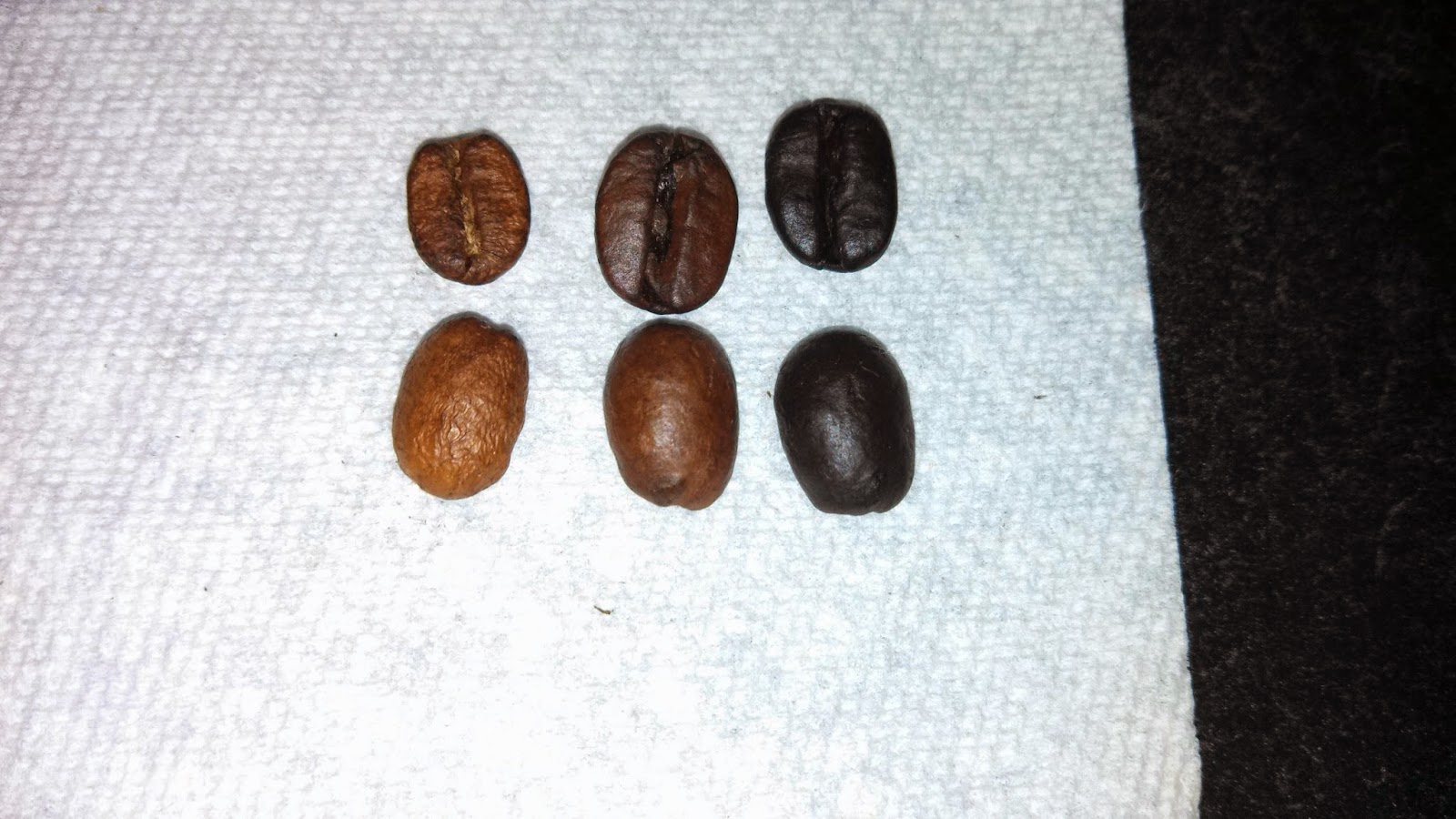
Blend Light Roast, Medium Roast, and Dark Roast Beans to Make Your Custom Coffee Blend
Image Source: Dr. Penny Pincher

Some people like to blend other flavors into their coffee grounds, such as chickory to make New Orleans style coffee.  My sister-in-law likes flavors like hazelnut flavored coffee.  Flavored coffee has flavoring added into the grounds or beans.  To me, flavored coffee tastes like chemicals and is hard to drink at all.  I once gave her a perfectly good bag of expensive coffee grounds because they were butterscotch flavored and I didn't notice this when I bought it.

I blend different coffee beans together sometimes, usually when I only have a few coffee beans left in a bag.  I have made some really good tasting blends.  My favorites are mostly medium roast with some dark roast beans mixed in.

Another popular blend is to mix regular coffee with decaf coffee.  A mix of half regular coffee and half decaf is known as "half caff" coffee.


Blend Coffee Beans or Coffee Grounds to Make a Custom Coffee Blend
Image Source: Dr. Penny Pincher


Recommended Reading
Here is my article on coffee terms- learn more about coffee terms such as Cafe Americano.

Learn about coffee alternatives and coffee substitutes that have less caffeine than coffee.  There are many options for low caffeine or caffeine free coffee beyond decaf or half-caff!

Copyright © 2014 by Dr. Penny Pincher.  All Rights Reserved. Coffee Maker Journal

Sabtu, 25 Januari 2014

Why Does Decaf Coffee Taste Bad?

Why Does Decaf Coffee Taste Bad?

Decaf Coffee- It Doesn't Taste As Good As Regular Coffee!
Image Source: Dr. Penny Pincher


I guess saying that decaf coffee tastes bad is a bit of an overstatement.  I would say decaf coffee is drinkable, but it is not as good as regular coffee.

If you believe the decaf coffee advertising material, you would think decaf should taste like regular coffee.  But it doesn't.  The green coffee beans must be processed to remove most of the caffeine.  This is a very invasive process and changes the flavor- and not for the better.

What Does Decaffeinated Coffee Taste Like?

I drink one 16 oz cup of regular coffee brewed from fresh ground coffee beans every morning, and then switch to decaf.  I drink several cups of decaf every day.  Usually a couple of Keurig k-cups of decaf varieties such as Dark Magic, Tully's, Newman's Own or Donut Shop.  It is not fair to compare coffee brewed from fresh ground beans with Keurig coffee- fresh ground beans make better coffee.  It is also not fair to compare regular coffee to decaf coffee- regular coffee tastes better.

Keurig k-cup decaf coffee
Image Source: Dr. Penny Pincher


I also buy ground decaf coffee or whole bean decaf coffee to brew at home.  This makes for a fairer comparison between regular and decaf coffee.  Regular coffee tastes better, even comparing similar roasts and coffee preparation methods.  Regular coffee has a richer, fuller flavor.  Decaf has more of a burned flavor and is missing some of the complex flavor of regular coffee.  It's sort of like the difference between listening to music in stereo, and then listening to the same song in mono.  Both sound similar, but the one in stereo is much more satisfying.  Why does regular coffee taste better since you can't taste caffeine?

Why Does Decaf Coffee Have Less Flavor?

The process of removing caffeine also impacts the flavor of coffee.  When coffee is decaffeinated, green coffee beans are processed to extract most of the caffeine.  In the old days, chemical solvents were used.  Some of these solvents were toxic and these are not commonly used anymore.  The two common methods of coffee decaffeination today are:

  • Water Extraction: Hot water is used to extract caffeine, but also extracts flavor compounds.  Water containing flavor compounds is used to try to replace the flavor in the "Swiss Water Process".
  • Supercritical Fluid CO2 Extraction: Carbon Dioxide is used at controlled temperature and pressure to penetrate the green coffee beans and dissolve the caffeine so that it can be extracted.
I think the flavor of decaf coffee is negatively impacted by the processing needed to remove most of the caffeine.  There is potential for a variety of coffee trees to be grown that produce decaf coffee beans with no processing required to remove caffeine.  This could be accomplished through finding coffee plants with a natural mutation, or through genetically modified coffee plants that have the chemical pathway to produce caffeine disrupted.

Wouldn't It Be Great If You Could Grow Decaf Coffee?
Image Source: Dr. Penny Pincher

How to Get the Best Decaf Coffee Possible

Given the shortcomings of decaf coffee due to the processing required to remove most of the caffeine, what can you do to get the best possible cup of decaf?  Follow the same principles that are used to make a great cup of regular coffee:


Copyright © 2014 by Dr. Penny Pincher.  All Rights Reserved. Coffee Maker Journal

Rabu, 22 Januari 2014

No More Coffee Beans at Walmart!?

No More Coffee Beans at Walmart?

No More Coffee Beans at Walmart?
Image Source: Dr. Penny Pincher

My wife buys my coffee beans for me when she buys groceries most of the time.  She know my favorite kinds.  I like dark roast Starbucks from Walmart or City Kid from Target.  I have made coffee from whole beans for over 15 years now, and am on my 3rd coffee grinder.  Grinding fresh coffee beans just before brewing means you'll get a fresh cup of coffee with great coffee flavor.

I came home from work to learn from my wife that Walmart did not have and coffee beans for sale.  They had removed their bulk dispensers and did not have any prepackaged whole beans either.  What's up with that!

Is Keurig Replacing Whole Beans?

Are Keurig k-cups replacing whole coffee beans?
Image Source: Dr. Penny Pincher

My first thought is the Keurig k-cups may be replacing whole coffee beans.  There is more profit to be made selling k-cups than selling whole beans.  If you figure out how much ground coffee is in a k-cup and how much it sells for, you'll see the opportunity for profit.  It takes a lot of shelf space to offer lots of different kinds of coffee beans, and the bulk coffee bean dispensers also take a lot of room.  Walmart must have concluded that they could make more money from that shelf space by selling something else.

Do People Have Time for Great Coffee Anymore?

Consumer demand must also be a factor in Walmart's move to stop selling whole coffee beans.  Walmart must not be concerned that people will shop elsewhere to be able to buy whole coffee beans.  This is probably a reasonable conclusion.  The grocery bill is significantly lower at Walmart, so the hassle of picking up coffee beans at another store is not that big of a deal.

Do people have time for great coffee anymore?
Image Source: Dr. Penny Pincher

Perhaps not that many people grind coffee beans at home these days.  There is a Keurig machine at my office, and it is very convenient.  I would say the coffee quality is good, but not great.  Keurig coffee is a step below what I can make at home from fresh ground beans, or what you can get in a coffee shop.  But convenience is important to most people:

  • You can just pop a k-cup in your Keurig and get coffee in about 1 minute
  • You can try different roasts and flavors easily
  • You never have to see or touch a used coffee filter
  • There are no coffee grounds to store, measure, clean-up, etc.

There are certainly advantages to Keurig, but I'm staying with my coffee beans.  Here's how I use whole coffee beans to make great coffee at home every day.

Update:  I checked Walmart today and found that they have a small set of coffee bean dispensers (9 varieties) and a few bags of whole coffee beans available.  So you can find coffee beans at Walmart just not much selection.  Times are changing in the coffee world.  I will shop where I can get whole beans or order online!  It is surprising that whole bean coffee is not popular enough to merit much shelf space.

Walmart has only a few whole bean coffee choices
Image source: Dr. Penny Pincher


Copyright © 2014 by Dr. Penny Pincher.  All Rights Reserved. Coffee Maker Journal

Sabtu, 20 Juli 2013

Coffee Maker Cleaner: Should You Clean your Coffee Maker with Vinegar?

Why You Need to Clean Your Coffee Maker


Should you clean your coffee maker with vinegar?
Image Source: Dr. Penny Pincher

When I talk about cleaning your coffee maker, I am talking about cleaning the INSIDE of your coffee maker. Water carries dissolved minerals that are deposited inside your coffee maker. When the water evaporates from liquid into steam, it leaves mineral deposits inside your coffee maker. These deposits of lime, calcium, and other minerals result in slower water flow through your coffee maker. Some effects of mineral deposits inside your coffee maker:
  • It takes longer to make coffee. A coffee maker with severe mineral deposits can take more than twice as long to make a pot of coffee.
  • It can affect the taste of your coffee. One side effect of slower brewing can be that the coffee starts to become stale before you drink it, especially if it is sitting on a burner
  • Your coffee maker can stop working due to excessive mineral deposits. The flow of water through your coffee maker can slow to a trickle and even stop completely. You will not longer be able to make coffee!

How Often Should You Clean Your Coffee Maker?

How often you need to clean your coffee maker depends on the hardness of the water that you use to make coffee. In my area, the water is hard- meaning it carries a lot of dissolved minerals. Even though my house has a water softener to remove some of the minerals, it still affects my coffee maker after about 1 month of brewing 1 pot of coffee per day.
If the water is not hard in your area, and you only brew one pot of coffee per day, you may be able to go 2 or 3 months between cleanings. If your water is hard and you brew more than one pot of coffee per day, you may need to clean your coffee maker more than once per month.

Should You Clean a Coffee Maker with Vinegar?

Vinegar contains an acid- acetic acid. The acid in vinegar allows it to dissolve minerals readily. Vinegar is also edible, although it has a sour taste and strong acidic smell. These characteristic- being acidic and edible- make vinegar a good coffee maker cleaner. Many coffee maker manuals suggest using vinegar to clean coffee makers.

Large bottle of vinegar
Vinegar for cleaning coffee makers
Image Source: Dr. Penny Pincher

However, the strong odor and taste of vinegar are factors that make it undesirable to use as a coffee maker cleaner. My wife can tell from anywhere in the house when I start cleaning the coffee maker with vinegar! It also leaves the taste of vinegar behind- you should run 2 pots of water through your coffee maker after cleaning it with vinegar to remove the vinegar taste so it won't taint you coffee.

What is the Best Coffee Maker Cleaner?

If you don't like the odor and taste of vinegar, there are other options. You can buy coffee maker cleaners that contain acid other than acetic acid. A common type is coffee maker cleaner that uses sulfamic acid. This is available in liquid form or in power form that you mix with water.

Dip-it liquid coffee maker cleaner- no bad smell!
Image Source: Dr. Penny Pincher
I tried a brand of sulfamic acid coffee maker cleaner called "dip-it". I found that it worked as well as vinegar, but without the bad smell and taste. dip-it costs about $3.50 for a 7 oz bottle of liquid that can clean your coffee maker twice.
After running 5 cups of water with 1/2 a bottle (3.5 oz) of dip-it through your coffee maker, rinse by brewing 2 pots of cold water only and you are ready to make coffee again.


You can also get the powder form of sulfamic acid in a brand called Mr. Coffee Coffeemaker Cleaner. You mix the power with water and run the mixture though your coffee maker in the same way as when brewing coffee. A box of Mr. Coffee Coffeemaker Cleaner contains 2 packets of powder- enough to clean your coffee maker twice.

Mr. Coffee coffee maker cleaner powder
Image Source: Dr. Penny Pincher

As with vinegar and the dip-it liquid coffee maker cleaner, you'll need to rinse your coffee maker by brewing cold water only twice before making coffee.

Coffee Maker Cleaner can Fix a Broken Coffee Maker!

After 8 months of making great coffee with my Melitta coffee maker, the coffee maker suddenly stopped working. It produced only steam. Almost no hot water reached the brew basket, so I got no coffee. Believe me, it was a rough start to the day! Here's a description of how I survived making coffee with a broken coffee maker for a few days. This method of making coffee also works in a power outage with no electricity.
I assumed the failure was caused by a clogged or stuck check valve in the tube from the reservoir to the heating element. I contacted Melitta customer service with a description of the problem. I expected them to have me send the unit in for repair, or even replace the unit since it was still under a 1 year warranty.
The response from Melitta came back on the next business day. They recommended cleaning the coffee maker with vinegar. I had been cleaning my coffee maker with vinegar every month or two. I think it had been even more than two months since I cleaned it when it stopped working. Our water is hard and has lots of mineral content. But I was skeptical that deposits would cause the coffee maker to suddenly stop working.
I decided a vinegar treatment was worth a try. I filled the reservoir with white vinegar, 4% concentration, and turned the coffee maker on. At first just steam came out the top, but eventually there was a slow drip of vinegar into the pot. It took about 90 minutes to run the first tank of vinegar through. I picked up some stronger vinegar- 5% concentration. This went through in about 10 minutes! I ran one more tank of vinegar to get it really clean. I was back in business.
I didn't realize how important it is to clean your coffee maker regularly. I'm going to clean my coffee maker once a month to prevent this from happening again. I'll clean it on the first of every month so I don't forget.

Coffee Maker Cleaner Recommendations

  • Clean your coffee maker with coffee maker cleaner once a month
  • Use either vinegar or a sulfamic acid product
  • Vinegar is cheap and effective, but smells horrible when you heat it in your coffee maker
  • Use a coffee maker cleaner with sulfamic acid such as dip-it or Mr. Coffee Coffeemaker Cleaner if the smell of vinegar bothers you
  • Coffee maker cleaner such as dip-it or Mr. Coffee Coffeemaker Cleaner takes up a lot less room in your pantry than a large bottle of vinegar


Recommended Reading:

Copyright © 2013 Dr. Penny Pincher. All Rights Reserved. Coffee Maker Journal

Jumat, 19 Juli 2013

How to Make Great Coffee at Home

How to Make Great Coffee at Home


How to make a great cup of coffee
Source: Image Courtesy of Julius Schorzman CC-SA-20

If you want to make great coffee at home, you’ll need to make coffee differently than most people. You may need some additional equipment, for example a coffee bean grinder and a coffee maker with a cone filter basket and thermal carafe. The good news is that these items are not very expensive. You may also need to buy your coffee in a different way- whole beans rather than ground coffee. You may need to change the main ingredient in your coffee- the water you use. The better the water, the better the coffee will be. Making great coffee is not very difficult or expensive, but you need to know a few tricks to get the best tasting, freshest coffee possible.

Great Coffee Begins with Whole Coffee Beans


Great coffee beans make great coffee!
Source: Image courtesy of Nate Steiner CC-20

There are lots of high quality coffee beans available in stores and on-line. Look for Arabica coffee beans- not Robusta. Robusta coffee beans have a sour flavor and are not nearly as good as Arabica beans. Green coffee beans are roasted to develop flavor. During roasting, coffee beans will make a cracking sound as they transition from green coffee to light roast coffee (“first crack”). The beans will crack again as they transition from medium roast to dark roast (“second crack”). Light roast coffee tends to be more acidic. Medium roast is sweeter. Dark roast develops spicy flavors, and French roast (or double roast) takes on a smoky flavor. The darker the roast of the coffee beans, the more oily the beans will appear. My current favorite is medium to dark roast. I look for coffee beans that are just slightly oily.
I avoid “flavored” coffee beans. You can buy coffee beans flavored with hazelnut, caramel, and other flavors. I like the flavor of natural coffee much better. If you like flavoring, add a bit of flavoring syrup after you have brewed the coffee, but do not use flavored beans. I suspect that coffee companies use their stale coffee beans or low quality coffee beans in flavored coffee. You can cover up a lot of problems by flavoring the beans…


Unlike cheese, the more words used to describe the coffee beans, the better the quality of the beans. Some good attributes in coffee beans are single origin, shade grown, and organic. While these attributes alone do not ensure high quality coffee beans, if attention is being paid to how the coffee is produced and sold, it is likely to result in high quality coffee beans.
I buy enough coffee beans to last for about 1 week and keep them in an airtight container in a cool dark place. While it is important to keep coffee beans cool to protect flavor, I do not recommend placing coffee beans in the refrigerator or freezer. Coffee beans easily pick up flavors from their environment and could pick up stray flavors from your refrigerator or freezer. Exposing cold coffee beans to room temperature air also causes moisture to condense on the coffee beans. I prefer to store my coffee beans in a pantry or cupboard at about 75 degrees.

Grind Coffee Beans Just Before Brewing Coffee

Great coffee starts with whole coffee beans. For the best tasting coffee, you’ll need to grind the beans immediately before brewing. When coffee is ground, it starts to lose flavor. You can buy whole coffee beans at the grocery store and use a grinder at the store if you want to use coffee grounds at home. However, this is still not nearly as good as grinding whole beans fresh for every pot of coffee that you brew. For great coffee at home, you will need a coffee grinder. You can get good coffee grinders starting at around $30.

Blade coffee grinder- not as good as a burr coffee grinder
Image Source: Dr. Penny Pincher

The main varieties are blade grinders, disc burr grinders, and conical burr grinders. Avoid blade grinders unless you are on a tight budget. I found that disc burr grinders are a good value. Conical burr grinders provide the best tasting coffee, but these are the most expensive type of coffee grinder. This article describes the types of coffee grinders with pictures.


Use Filtered Water to Make Great Coffee

Since water is the main ingredient in coffee, you want to use the best quality water you can get. Using a water filer can remove unwanted minerals and flavors from your tap water. You can buy carbon filters that are built-in to a water pitcher. If you have a refrigerator that dispenses water, this is a great way to get water for coffee. Just make sure your filer has been changed recently- most refrigerators need a new filer every 6 months.


Use the Right Kind of Coffee Maker to Make Great Coffee

Basket Filter vs Cone Filter
Auto drip coffee makers are very convenient. They heat the water to the correct temperature and drip it over the ground coffee at the correct rate to extract maximum flavor from the ground coffee. The type of filter basket that your coffee maker has is important to flavor extraction. The main types of filter baskets in coffee makers are described as either cone filters or basket filters. Basket filters have a flat bottom, while cone filters are wider at the top and narrow to a point at the bottom.
Coffee makers with cone filters extract more flavor from your coffee beans. Water flows through more of the coffee beans in a cone filter than in a basket filter. In a basket filter, the water tends to flow down through the ground coffee directly below where the water drips out inside the coffee maker. This results in some of the coffee grounds being underutilized. In a cone filter, water is forced to flow through the coffee grounds more evenly, resulting in better flavor extraction. This article explains the differences between cone filters and basket filters.
Glass Carafe vs Thermal Carafe
If your coffee maker has a glass carafe that sits on a burner to keep it warm, you are not getting the best coffee that you can. Heating the coffee on a burner makes it taste stale very quickly. Instead use a coffee maker with a thermal carafe to keep the coffee warm without heating it on a burner. The ideal temperature for brewing coffee is between 195 and 205 degrees. Coffee should not be heated after it is brewed- this results in stale, bitter tasting coffee. This article reviews my favorite thermal coffee maker.


Where to Start to Make Great Coffee at Home?

There is a lot to learn and possibly some coffee equipment to buy. I would suggest the place to start would be to use filtered water with your existing coffee equipment.
The next step: get a coffee grinder and start grinding whole beans just before brewing. You'll notice a big improvement in the flavor of your coffee!
After that, consider getting a coffee maker with a cone filter and thermal carafe. This will help you to make great coffee at home. I like the coffee I make myself at home better than Starbucks or Intelligentsia coffee from a coffee shop.


Copyright © 2013 Dr. Penny Pincher. All Rights Reserved. Coffee Maker Journal

.

Jumat, 28 Juni 2013

Coffee Filter Types: Cone vs Basket Coffee Filters

Cone Coffee Filters vs Basket Coffee Filters

One of the main distinctions between auto drip coffee makers is the filter type used. The main choices are cone filters or basket filters. The shape is the difference between filter types. The cone filter is shaped like a cone with the bottom of the filter narrower than the top.


store display of basket and cone coffee filters
Basket coffee filters vs Cone coffee filters: which is better?
Image Source: Dr. Penny Pincher

The Problem with Basket Coffee Filters

A basket filter is flat on the bottom. The shape of the coffee filter makes a big difference in the coffee flavor. Since the basket filter spreads grounds out over a wider area, uneven brewing can occur. For example, if the hot water from the coffee maker drips in the center of the filter basket, only part of the grounds are fully utilized for brewing coffee, resulting in less coffee flavor. Even with the shower head style auto drip brewer water distribution, the areas directly under the several points where water comes out get more exposure to hot water and other areas of coffee grounds may get damp, but are not fully brewed.

Store display with basket coffee filters
Basket coffee filter options
Image Source: Dr. Penny Pincher

Basket Coffee Filter Sizes

Basket coffee filters are sold by the coffee maker capacity. Some common basket coffee filter sizes:
  • 4 to 6 cup basket filters
  • 10 cup basket filters
  • 8 to 12 cup filters

Paper Coffee Filter Cost and Paper Types

The cost of coffee filters depends on the brand, quantity, and where you buy. Cone filters cost about 5 cents each, basket filters cost about 4 cents each. As with most products, you can choose different filter quality and paper type. You can get paper coffee filters made with white bleached paper, or with brown unbleached paper. I prefer to use unbleached cone filters. One of the great things about coffee is that it is 100% natural. I like to use unbleached filters to reduce the amount of chemicals involved with making coffee and keep my coffee as natural as possible.

Make Better Coffee with Cone Filters

The cone filter funnels hot water through the grounds more effectively, extracting more flavor from the coffee grounds. Water that is applied at the top of the cone travels through more coffee grounds, extracting more flavor when brewing coffee. Cone filters are a bit more expensive than basket filters and are commonly available at grocery stores.

Cone Coffee Filter Sizes

The standard cone filter sizes are:
  • #1: Fits 1 cup electric cone coffee makers
  • #2: Fits 2-6 cup electric coffee makers and 1 cup non-electric cone coffee makers
  • #4: fits all 8-12 cup cone coffee makers
  • #6: Fits 10 cup non-electric cone coffee makers
For example, my 10 cup thermal cone coffee maker uses #4 cone filters.


Packages of cone coffee filters on store display
Cone coffee filter options
Image Source: Dr. Penny Pincher


Using a Cone Filter to Make Coffee

The cone filters come flat in a box or a bag. When making coffee with a cone filter, take the cone filter out, fold the filter along the crimp on the side- this will make it stay in a cone shape. Place the filter in your cone filter basket of you coffee maker, and add coffee grounds. If you have switched to a cone filer from a basket filter, you may need to adjust the amount of coffee grounds you use. You may need less coffee grounds with a cone filer.


Cone Filters are Packaged Flat

Cone filter flat like a sheet of paper
Cone coffee is flat when it comes out of the package
Image source: Dr. Penny Pincher

Fold Cone Filter and Place in Coffee Maker

Placement of cone filter in coffee maker
Fold cone filter along the seam and place in your coffee maker
Image Source: Dr. Penny Pincher


Best Cone Filter Coffee Maker

My coffee maker is a Melitta 10 cup with thermal carafe. It uses a #4 cone filter for the best tasting coffee. The thermal carafe is also a great feature. If you have a coffee maker with a glass pot that sits on a burner, you are not getting the best tasting coffee. It gets stale quickly, and sitting on the burner changes the flavor of the coffee- and not for the better. The thermal carafe keeps the coffee hot and fresh. The combination of a cone filter and thermal carafe is how to make great tasting coffee at home.


Copyright © 2013 Dr. Penny Pincher. All Rights Reserved. Coffee Maker Journal

Minggu, 09 Juni 2013

Best Coffee Grinders


Why you need a coffee grinder

After coffee is ground, it starts losing compounds that contribute flavor within a few minutes.  Making the best-tasting, freshest coffee requires grinding the beans just before brewing.  You can get a coffee grinder at home for under $50 and use your current coffee maker to get better coffee.  Read on for information about the best coffee grinders for home use.

Shown below: Mr. Coffee Automatic Burr Mill Grinder

This is a stainless steel coffee grinder with plastic bin for the grounds
Mr. Coffee Disc Burr Coffee Grinder
Image Source: Dr. Penny Pincher


Best Coffee Grinders

Types of coffee grinders can be categorized in terms of the grinding mechanism.  The primary types are blade grinders, disc burr grinders, and conical burr grinders.

Blade Grinders

Blade grinders use a thin steel blade to grind coffee beans.  This is considered the lowest quality of coffee grinder for a few reasons.  One is that the small surface of the blade can heat up, causing scorching of the coffee grounds.  This results in an undesirable burned flavor.  Another issue with blade grinders is that they slice the beans rather than crushing them, resulting in a range of fine and course grounds.  It is harder to control the coarseness of the grounds using a blade grinder.

Blade coffee grinder has a flat blade
Blade coffee grinder
Image source: Dr. Penny Pincher

Disc Burr Grinders

Disc burr grinders are the most affordable of the burr grinders and produce good results.  The disc burr grinder mechanism uses a disc with raised surfaces that are used to slice the beans.  The pitch of the raised surfaces can be used to control the coarseness of the grounds.


Disc burr coffee grinder has a flat disc with raised surfaces
Disc Burr Coffee Grinder
Image Source: Dr. Penny Pincher


Conical Burr Grinders

The most expensive type of coffee bean grinder is a conical burr grinder.  High quality conical burr grinders cost several hundred dollars.  This grinding mechanism uses a cone shaped burr for the surface to crush the coffee beans into grounds.  Conical burr grinders produce consistent grind coarseness without scorching.


Conical burr grinder uses a cone shaped grinding element
Conical Burr Grinder
Image Source: Dr. Penny Pincher


Electric vs. Hand Crank Coffee Grinders

Most coffee grinders are electric, which is more convenient than turning a crank.  Hand grinders are powered by manually turning a crank to grind the beans and usually have a burr grinding mechanism.  Hand grinders have one major advantage over electric grinders- they are very quiet.  If you make coffee early in the morning while others in your house are asleep, a hand grinder is quiet enough not to wake anyone up.

Some electric grinders are automatic- you press the button once and the grinder runs for a set amount of time.  Other electric grinders run only while the button is held down.  I prefer the automatic variety so I can walk away while the grinder runs.


This manual coffee grinder has a crank on the side
Hand coffee grinder with crank
Image courtesy of Poulpy CC-SA-30


Troubleshooting Coffee Grinders

Sometimes a coffee grinder will get jammed.  Here are some steps to troubleshot a coffee grinder:

  • Unplug the coffee grinder
  • Pour the beans from the hopper into a bowl
  • Clear any beans or bean fragments from around the grinding blade or burr
  • Manually turn the blade or burr to make sure it is free of obstructions


How to grind your own beans at the grocery store

Most coffee shops and grocery stores offer coffee grinders for you to use for free.  These grinders are quick and easy to use.  Here are the steps to grind your own coffee beans at the store:

  • Fill the hopper with selected coffee beans
  • Set the desired coarseness for the ground coffee using the knob (select medium for most coffee makers)
  • Place a bag under the chute, 
  • Press and hold the grind button.  
  • In about 30 seconds you’ll have about 12 ounces of ground coffee ready to take home

Note: Don’t over-fill the bag or it will be difficult to close

Electric grinder next to bins of coffee beans
Coffee Grinder at the Grocery Store
Image Source: Dr. Penny Pincher

The main issue with grinding the beans at the store is that coffee beans start to lose flavor almost immediately after grinding.  You will get much better tasting coffee with more rich and complex flavor if you grind the coffee beans immediately before brewing.  The only practical way to do this is to have your own coffee grinder at home.

Grind Adjustment- Selecting coarse to fine grind

Automatic drip coffee makers produce the best coffee using medium coarseness.  If you use grounds that are too fine, the grounds will get packed together in the coffee filter and will not allow enough water to pass through efficiently.  Espresso makers use a finer grind since the high temperature and pressure in the small brewing chamber produces the maximum flavor with fine grounds.

Close-up on adjustment knob on grocery store coffee grinder
Coffee grinder adjustment knob: coarse, medium, or fine grind
Image Source: Dr. Penny Pincher


Best Coffee Grinder Recommendations

  • Get a coffee grinder at home and grind whole coffee beans just before brewing- you’ll great fresh, flavorful coffee
  • A disc burr grinder produces excellent coffee and is an affordable option
  • Consider a hand grinder if grinding without making a lot of noise would be beneficial
  • Select a single touch electric grinder that runs for a preset time with a single touch of the grind button
  • I have had success with this Mr. Coffee Automatic Burr Mill GrinderThis model has the automatic grind feature that I like and does a great job grinding.


Copyright © 2013 by Dr. Penny Pincher.  All Rights Reserved. Coffee Maker Journal